
Hip bursitis treatment: 5 physical therapy techniques that may improve mobility and reduce pain

Hip bursitis can make daily movement feel harder than it should. Walking, climbing stairs, getting out of a chair or lying on your side may cause pain on the outside of your hip. You may notice stiffness, tenderness, weakness or pain that travels down the outside of your thigh.
If these symptoms are limiting your routine, physical therapy may help. KC Rehab’s physical therapists offer treatment. Hip bursitis treatment often focuses on easing irritation, improving movement and building strength in the muscles that support your hip.
What is hip bursitis?
Hip bursitis happens when a bursa in or near the hip becomes irritated. A bursa is a small fluid-filled sac that helps reduce friction between bones and soft tissues.
The most common type is trochanteric bursitis. It affects the bursa near the bony point on the outside of the hip.
Common symptoms include:
Pain on the outer hip or thigh
Tenderness when pressing on the hip
Pain when lying on the affected side
Discomfort with walking or using stairs
Stiffness when standing after sitting
Hip weakness or reduced balance
When should you consider hip bursitis treatment?
You may want to seek care if hip pain is changing how you move. Some people start limping, avoiding stairs or shifting weight away from the painful side. These changes can place extra stress on the back, knees or unaffected hip.
Talk to a health care provider right away if your pain started after a fall, your hip is red or swollen, you have a fever, or you cannot put weight on your leg.
5 physical therapy techniques for hip bursitis treatment
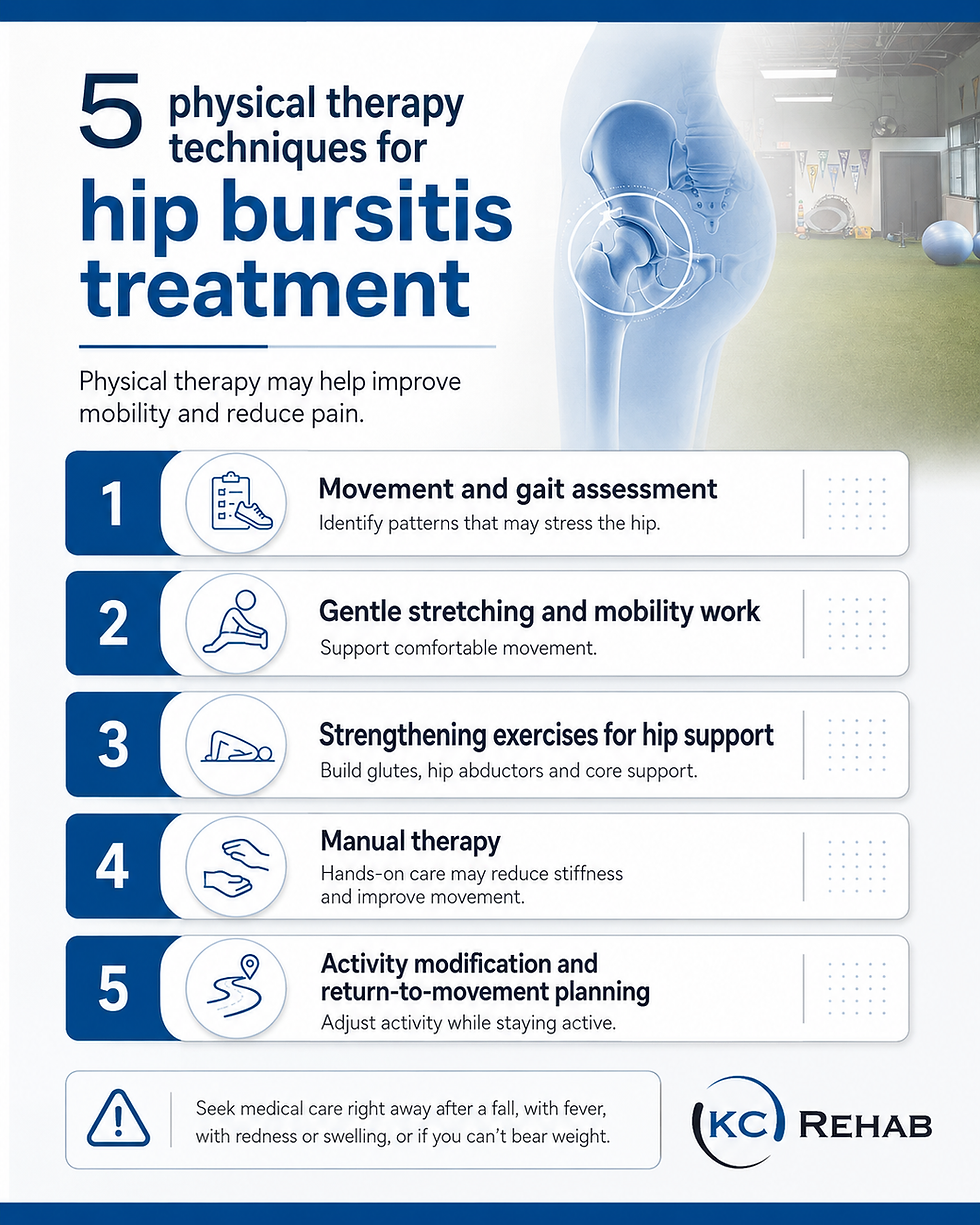
1. Movement and gait assessment
A physical therapist may start by watching how you walk, squat, climb a step or stand from a chair. They may also check your hip motion, strength, balance and posture.
This helps identify what may be adding stress to your hip, such as glute weakness, tight muscles, limited mobility or changes in how your hip, knee, foot and pelvis work together.
2. Gentle stretching and mobility work
Hip bursitis can make nearby muscles feel tight or guarded. Gentle stretching may help reduce stiffness and make movement easier.
Your physical therapist may create a plan including:
Hip flexor stretches
Glute stretches
Hamstring stretches
Gentle hip rotation
Lower back mobility exercises
You may keep these stretches in a safe, comfortable range with their support. Stretching should not feel sharp or intense.
3. Strengthening exercises for hip support
Strengthening is often a key part of hip bursitis treatment. Strong muscles can help support the hip and reduce stress on the irritated bursa.
Your therapist may focus on:
Glutes
Hip abductors
Core muscles
Thigh muscles
Balance muscles
Exercises may start with gentle movements like these. As symptoms improve, your therapist may add more exercises that match your daily activities.
4. Manual therapy
Manual therapy is hands-on care from a physical therapist. It may focus on muscles, joints and soft tissues around the hip, pelvis and lower back.
Manual therapy may help:
Reduce muscle tension
Improve joint mobility
Ease stiffness
Support better movement
Make exercise more comfortable
At KC Rehab, some clinicians may use specialized techniques when appropriate for a patient’s care plan.
5. Activity modification and return-to-movement planning
Hip bursitis can flare when the hip is exposed to repeated stress without enough recovery. That does not always mean complete rest. It may mean adjusting activities while your hip heals.
Your therapist may help you modify:
Exercise intensity
Sitting or sleeping positions
Work-related movement
Sports or fitness routines
This may help you stay active while reducing irritation. Your therapist can also guide your return to the activities that matter most to you.
What can you do at home for hip bursitis?
Your physical therapist may give you a home plan to support your progress. They may also recommend simple changes to reduce irritation.
Helpful habits may include:
Avoiding lying directly on the painful side
Taking movement breaks when sitting for long periods
Avoid sudden increases in walking, running or using stairs
Using ice or heat if recommended by a physical therapist
Following a physical therapist’s home exercise plan
Try not to push through sharp pain. Tell your physical therapist if an exercise makes symptoms worse.
How KC Rehab can help with hip bursitis treatment
KC Rehab provides physical therapy for people across the greater Kansas City Metro area. If hip bursitis is limiting your walking, sleep, exercise or daily movement, our team may help you find what may be contributing to your pain.
Your care plan may include hands-on treatment, targeted exercises, mobility work, education and a plan for returning to daily activities. The goal is to help reduce pain, improve strength and make movement feel more comfortable.
Contact our team today for more information or to schedule an initial appointment.
Frequently asked questions
1. What does hip bursitis feel like?
Hip bursitis often causes pain on the outside of the hip. You may feel tenderness, stiffness or other discomfort when:
Walking
Climbing stairs
Standing after being seated
Lying on your affected side
2. What causes hip bursitis?
Hip bursitis happens when a small fluid-filled sac near the hip becomes irritated. This irritation may be linked to:
Repeated stress
Muscle weakness
Tightness
Movement changes
Outer hip pressure
3. Can physical therapy help hip bursitis?
Physical therapy may help reduce pain, improve mobility and build strength in the muscles that support your hip. Your physical therapist can create a care plan based on your symptoms and daily activities.
4. What exercises help hip bursitis?
Your physical therapist can help you learn exercises that are safe for your symptoms. These exercises may be designed for:
Stretching your hip
Strengthening surrounding muscles
Improving your balance
Increasing hip mobility
5. Should stretching hurt if you have hip bursitis?
No. Stretching should feel gentle and controlled. It should not cause sharp or intense pain. Tell your physical therapist if a stretch makes your symptoms worse.
6. Why does hip bursitis hurt when you lie on your side?
Lying on the affected side can place pressure on the irritated bursa. Your physical therapist may suggest sleeping changes, such as avoiding the painful side or using pillows for support.
7. Do you need to stop all activity with hip bursitis?
Not necessarily. You may need to adjust your activity instead of stopping everything. Your physical therapist can help you stay active while reducing stress on the irritated area.
8. When should you seek care for hip pain?
You may want to seek care if hip pain is changing how you walk, use stairs, sleep or move during the day.
Contact a health care provider right away if:
Your pain starts after a fall
Your hip is red or swollen
You have a fever
You cannot put weight on your leg
9. What can you do at home for hip bursitis?
Ice or heat may help if recommended by your physical therapist. You may find some relief by:
Avoiding lying on the painful side
Taking breaks from movement
Steering clear of sudden increases in activity
Following your home physical therapy plan
10. How can KC Rehab help with hip bursitis treatment?
One of KC Rehab’s physical therapists can assess your movement, strength, balance and mobility. Your care plan may include hands-on treatment, targeted exercises, stretching, education and a plan to help you return to daily activities more comfortably.


Comments