
Hamstring injury recovery time: 3 physical therapy strategies to support healing

A hamstring injury can make everyday movement harder. You may feel pain in the back of your thigh when you walk, bend, climb stairs or try to exercise. If you are active, you may also feel unsure about when it is safe to return to running, sports or your normal workout routine.
One of the most common questions people ask is, “What is the typical hamstring injury recovery time?” The answer depends on the severity of the injury and how your body responds to care. A mild hamstring strain may improve in a few days to a couple of weeks. A more serious strain can take several weeks or months to heal.
Physical therapy at KC Rehab may help support your recovery by guiding your movement, building strength and helping you return to activity safely.
What affects hamstring injury recovery time?
Your hamstrings are the muscles in the back of your thigh. A hamstring strain happens when one or more of these muscles is stretched too far or torn. This can happen during running, jumping, lifting or sudden changes in direction.
Hamstring injury recovery time can depend on:
How severe the strain is
Where the injury happened
Your pain and swelling levels
Whether you can walk without limping
Your strength and flexibility before the injury
Your sport, job or activity goals
Whether you have had a hamstring injury before
Hamstring strains are often described in grades:
Grade 1 — Micro-tear with small muscle damage
Grade — Partial tear with more pain, weakness or swelling
Grade 3 — Severe or complete tear that may make walking difficult
You should seek medical care if you have heard a pop, have severe bruising, cannot put weight on your leg or have intense pain near the sitting bone or back of the knee. If the injury is severe, your doctor may recommend surgery followed by physical therapy rehabilitation.
Why physical therapy can help
Rest can be helpful in the early stage of a hamstring injury, but rest alone may not fully prepare your leg for normal movement. Your hamstring needs the right balance of protection, mobility and strengthening.
A physical therapist can help you understand:
What movements are safe right now
When to start stretching
How to build strength without making pain worse
When to return to walking, running or sports
How to lower your risk of reinjury
At KC Rehab, your physical therapist can assess your pain, strength, flexibility and movement patterns. Then they can build a plan based on your injury and your goals.
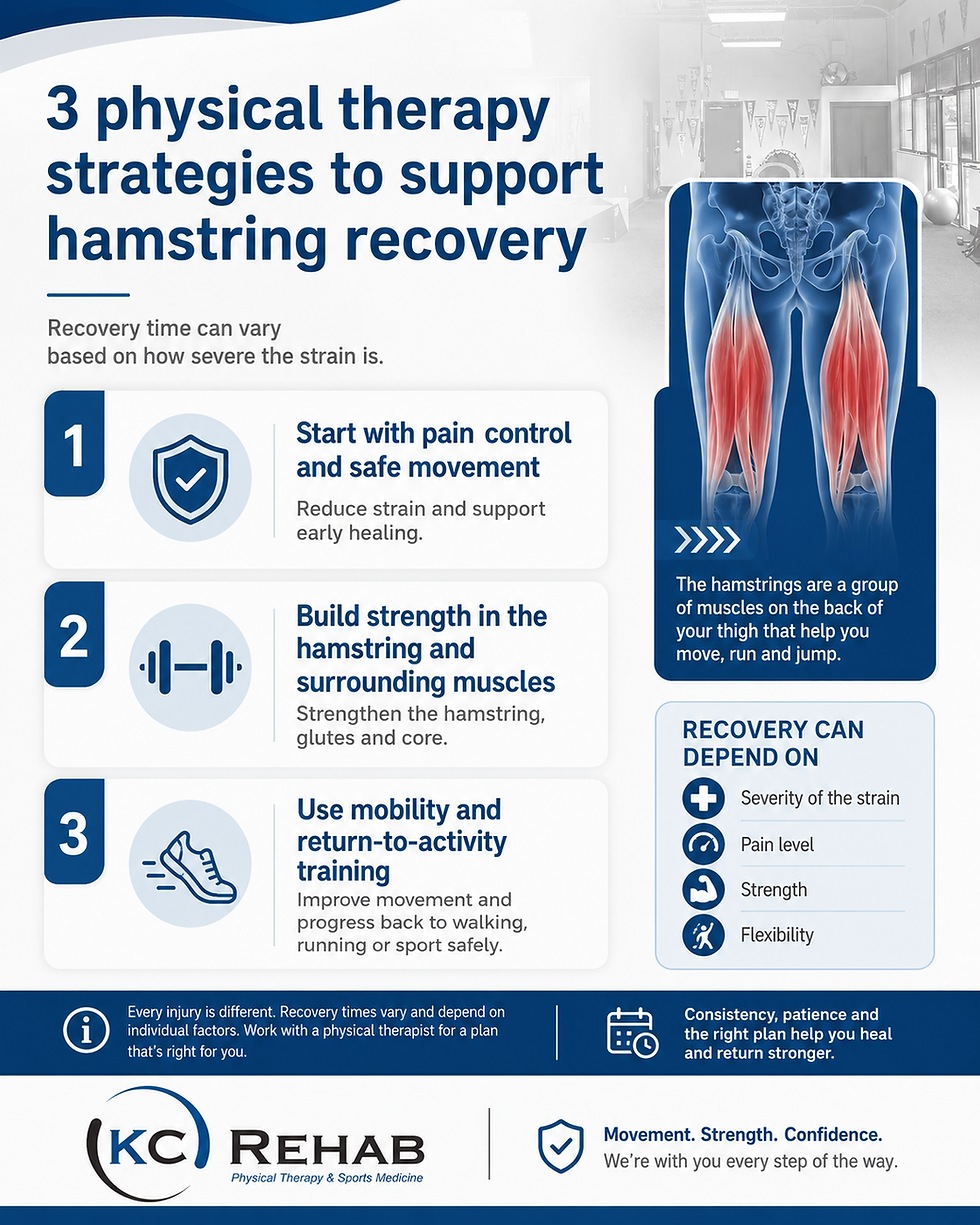
In the first stage of recovery, the goal is to calm symptoms and protect the healing tissue. This does not always mean complete rest. It often means finding safe ways to move without putting too much stress on the hamstring.
Your physical therapist may recommend:
Avoiding running, jumping or quick direction changes
Taking shorter steps while walking
Modifying work, sports or exercise activities
Using ice or compression when appropriate
Practicing gentle, pain-free movement
Your therapist may also check your walking pattern. Limping can place extra strain on your hips, knees, back or the other leg. Improving how you move can help reduce pain and support better healing.
2. Build strength in the hamstring and surrounding muscles
As pain improves, your physical therapist may guide you through strengthening exercises. This step is important because weakness can make it harder to return to daily activities, exercise or sports.
Your plan may include exercises for your:
Hamstrings
Glutes
Hips
Core
Calves
Quadriceps
These muscles work together when you walk, climb stairs, squat, run or change direction. If one area is weak, your hamstring may have to work harder than it should.
Strengthening often starts with gentle exercises. Over time, your therapist may add more resistance, range of motion or speed. This gradual progress helps your hamstring rebuild strength without overloading the healing tissue too soon.
3. Use mobility and return-to-activity training
Many people want to stretch a painful hamstring right away. However, stretching too hard too soon can make symptoms worse. A physical therapist can help you know when stretching is safe and how much is right for your stage of healing.
Mobility work may include:
Gentle hamstring movement
Hip mobility exercises
Balance training
Movement drills for walking or squatting
As you improve, your therapist may help you begin return-to-activity training. This is especially important if you want to get back to running, sports, lifting or a physical job. Working with a sports medicine doctor may be uniquely helpful.
Return-to-activity training may include:
Walk-to-jog progressions
Step-downs or lunges
Running drills
Jumping or landing practice
Sport-specific movements
Your physical therapist may choose exercises to reduce pain while helping your hamstring handle the activities you need in real life.
What can slow down recovery?
Some people feel better and return to activity too soon. Others avoid movement for too long and become stiff or weak. Either can slow progress.
Common recovery delays include:
Running before strength is restored
Stretching too hard too early
Ignoring pain during activity
Skipping home exercises
Not addressing hip, glute or core weakness
Returning to sports without a clear plan
A physical therapist can help you avoid these mistakes by adjusting your plan as your symptoms change.
KC Rehab can help support hamstring injury recovery
Hamstring injury recovery time is different for each person. A mild strain may heal quickly, while a more serious injury may take longer. With physical therapy, you can get a plan that supports healing, builds strength and helps you return to movement with more confidence.
If hamstring pain is affecting how you walk, work, exercise or play sports, KC Rehab is here to help. Our team can work with you to improve mobility, rebuild strength and support a safe return to your daily activities.
Contact our team today for more information or to schedule an initial appointment.
Frequently asked questions
1. How long does a hamstring injury take to heal?
Hamstring injury recovery time can vary. A mild strain may improve in days or weeks. A more serious strain may take several weeks or months to heal.
2. What does a hamstring injury feel like?
You may feel pain in the back of your thigh. You may also notice:
Tightness
Weakness
Swelling
Trouble moving normally
Heightened pain when walking, bending, climbing stairs or exercises
3. What affects hamstring injury recovery time?
Recovery time may depend on:
How severe the strain is
Where the injury happened
How much pain the injury involves
How strong your muscles are
How flexible you are
Whether you have had a previous hamstring injury
4. Can physical therapy help a hamstring injury?
Yes. Physical therapy may help you:
Guide movement carefully
Build strength in your leg
Prepare for daily activities, exercise or sports
5. Should you stretch a hamstring injury right away?
Not always. Stretching too hard too soon can make symptoms worse. Your physical therapist can help you know when stretching is safe and how much is right for your stage of healing.
6. What exercises help with hamstring injury recovery?
Your plan may include:
Gentle hamstring movement
Strengthening exercises
Hip mobility exercises
Balance training
Walking drills
Return-to-activity exercises
Your physical therapist can choose exercises based on your symptoms and goals.
7. Why does limping matter during hamstring recovery?
Limping can place extra stress on your hip, knee or back. It can also stress your uninjured leg. Your physical therapist may check how you walk and help you move in a way that supports healing.
8. When can you return to running or sports?
You may be ready when your hamstring has enough strength, mobility, balance and control for the activity. Your physical therapist can help guide a step-by-step return to running, sports, lifting or work tasks.
9. What can slow down hamstring injury recovery?
Recovery may slow if you:
Return to activity too quickly
Stretch too hard, too early
Ignore your pain level
Skip home exercises
Leave hip, glute or core issues untreated
10. How can KC Rehab help with hamstring injury recovery?
KC Rehab can provide a physical therapist to assess your pain, strength, flexibility and movement patterns. Your care plan may include safe movement, strengthening, mobility work, education and return-to-activity training.


Comments